
Perilla leaves also called “KkaenNip” (깻잎) are broadly referred to all the leaves of sesame, but among them, the leaves of perilla are used as food. Perilla is a crop grown to extract oil, and perilla leaves are harvested during growth and eaten for food. The place of origin is estimated to be Southeast Asia, and it is cultivated in Korea and China and is rarely cultivated in other countries. Perilla leaves are so nutritious that they are called “the best medicine on the table,” and their fragrant and soft texture enhances the taste buds in summer. It is used as a variety of side dishes, such as Ssam (쌈) vegetables, steamed perilla leaves, and pickled perilla leaves, and is an indispensable ingredient in Korean cuisine.

🛒 You can purchase Korean garlic chive seeds from my Koreanescent Etsy shop through this link.
■ Scientific Name: Perilla frutescens
■ Classification: Lamiaceae
■ English Name: Perilla
■ Korean Name: 깻잎 (KkaenNip)
■ Origin: Southeast Asia
■ Cultivation Condition:
ㅇ Perilla grows best in light shade (5 – 7 hours of sun) and tolerates full sun (7+ hours), but should be planted outdoors after all the threat of frost has passed.
ㅇ It needs rich, moist, well-drained soil with a pH of 5.5 – 6.5, and warm temperatures to grow well. Amend the soil with aged compost or manure, and loosen it with potting soil.
ㅇ It is best to choose a loam rich in organic matter as the cultivation soil. It is possible to sow seeds all year round, and it is convenient to sow between March and May in the case of home cultivation.
■ Physiological Characteristics:
ㅇ It is a self-seeding annual plant with perilla leaves that grow to 3-4 inches long and 2-3 inches wide.
ㅇ The leaves are broad oval, with a pointed tip and serrated edges.
ㅇ It is aromatic with a strong herbal, mint-like smell.
ㅇ The leaves are green with occasional touches of purple on the underside.
■ Sowing and Planting Seedlings:
ㅇ Germination Time: 7 – 14 Days
ㅇ Germination Temperature: 68 – 75˚F / 20 – 24˚C
ㅇ Seed Soaking: 12 Hours
ㅇ Seed Depth: ⅛ ” / 0.3 cm
ㅇ Needs Light to Germinate: Yes (cover very lightly)
ㅇ Plant Spacing: 8 – 12 ” / 20 cm – 30 cm
ㅇ Row Distance: 18 – 24 ” / 46 cm – 60 cm
ㅇ Maturity Days: 60 – 70 Days
■ How to Grow:
❍ When starting sowing indoors:
– If starting perilla seeds indoors, start seeding them about 2 months before transplanting outdoors.
– Soak the seeds in water for 12 hours to soften the seed coat.
– Seeds can take 7 to 14 days to germinate. (Perilla seeds, like most other seeds, should be started indoors.)
– Place the seeds in moist potted soil. Cover the seeds only very lightly (about ⅛ inch) as they need some light to germinate.
– Once planted, place the seeds in a warm place to facilitate the germination process. When the seeds reach a height of 3 inches, it is time to move them outdoors.
– Seedlings should be placed 8 – 12 inches apart in rows about 18 – 24 inches apart. Their planting should be in a rich, well-drained soil.
❍ When starting sowing outdoors:
– Soak the seeds in water for 12 hours to soften the seed coat.
– Sow the seeds ⅛ inch deep in rich soil and press gently. Do not bury them any deeper, because germination requires sunlight.
– It can take 7 to 14 days for the seeds to start to germinate. Once germinated, thin to 1 seedling per spot, about 8 – 12 inches apart. These will be large plants, so they need plenty of space to grow.
❍ Growing Tips:
– It is important to note what else is planted near the perilla. Larger plants have a larger root system. These roots can spread out and cause problems with the root system of plants placed around them. For the same reason, perilla is not the best plant for container gardens.
– If you prefer container gardening and want to grow perilla, the container must be large enough to support the size of the plant and its root system.
– As weeds grow, plants must compete for nutrients. Avoid this by regularly weeding the area where perilla is growing so that the plants get everything they need.
– Mulching around the perilla will prevent weeds from growing and will help the plant retain moisture.
– Young plants: Keep the soil moist but not soggy.
– Mature plants: Water when the top 1 inch of soil is dry.
– It requires about an inch of water per week.
– Good drainage is key to preventing root rot.
– Use the deep watering method. Instead of watering a little every day, water a lot a few days a week.
– Water early in the day. This will allow the plants to dry sufficiently before the cool nights arrive. Wet leaves and cool night air are great breeding grounds for mold and disease to form on plants.
– Fertilize once a month with a balanced organic fertilizer for lush foliage. Pinch off the top stems to encourage branching and bushier growth. If you don’t pinch the tops, the plant will grow taller and thinner.
– Weak leaves: Provide shade if in full sun, ensure proper watering, and enrich the soil with organic compost.
– Yellow tips: Check for overwatering. Make sure the topsoil dries slightly between waterings.
– Pests: Wash off aphids or spider mites with water or an insecticidal soap.
■ Hardiness Zones:
❍ Zones 2 – 11: Annual – grow for summer harvest.
❍ Other zones: Grow indoors or in a greenhouse.
■ Harvest:
– Harvesting is usually possible about 60 – 70 days after sowing.
– At this point, the plant should be about 8 inches tall. When these two requirements are met, the plant is ready for harvest.
– Harvest the plant using scissors to remove the leaves. Harvest the outer lower leaves first; new leaves keep growing.
– Saving seeds: Allow the flower spikes to dry brown on the plant, then collect the seeds.
■ Nutritional Value:
❍ It contains more than twice the iron content of spinach, and also contains abundant minerals such as calcium, vitamin A and vitamin C.
❍ Chlorophyll is effective in gastrointestinal disorders such as anorexia, diarrhea, and constipation.
❍ It is also rich in vitamin K, which acts to coagulate blood, and is known to help prevent cancer and various adult diseases.
■ Use:
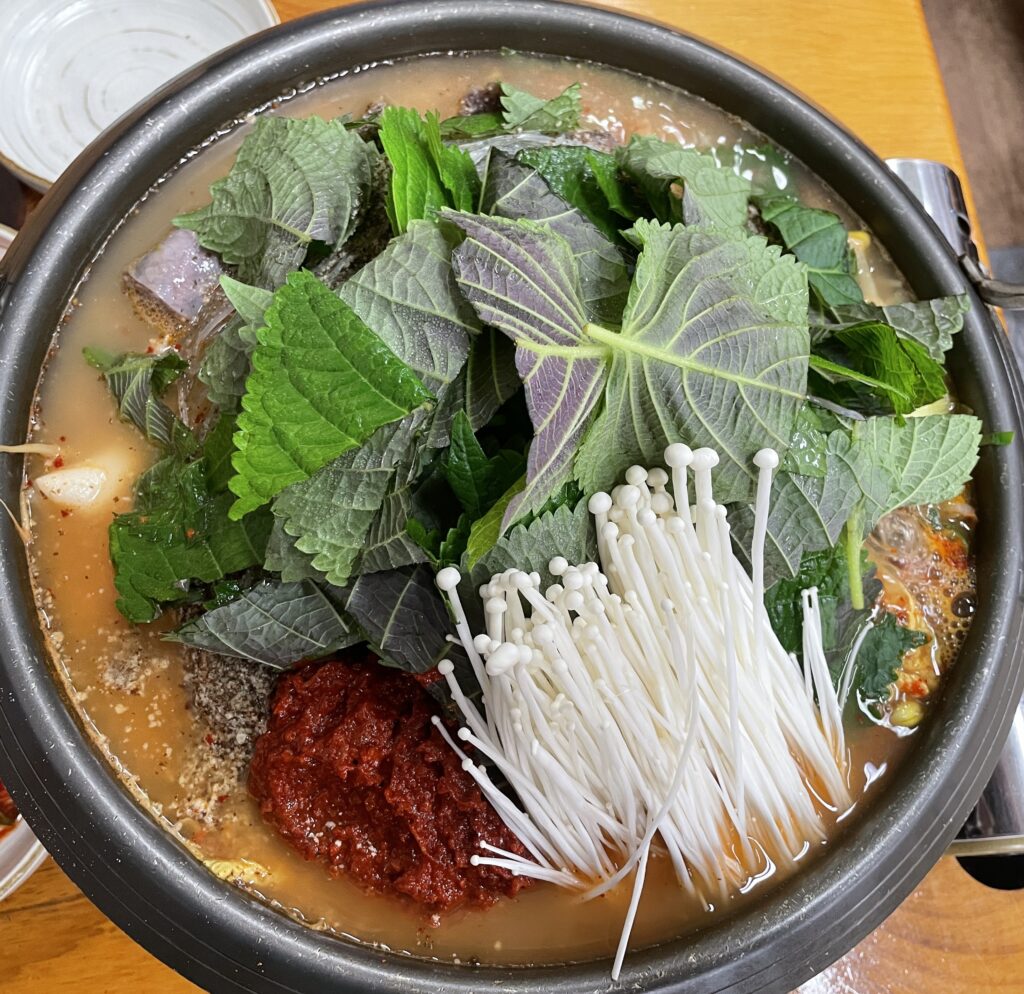
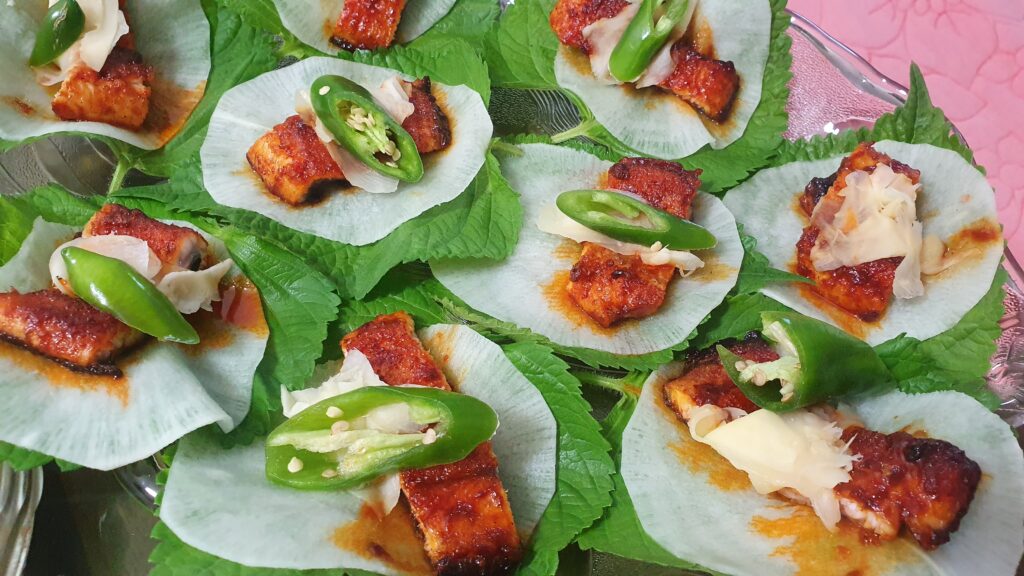
❍ BBQ Wraps, Pickles, Kimchi, Salad, Side-dishes, Jeon, Garnish, Soup, Etc.
❍ It contains aromatic essential oils such as Perillaaldehyde, limonene, peryl ketone, and is often used as a leaf vegetable because it has a unique flavor that arouses the taste buds. In particular, it is often used for wrapping with lettuce because it is often eaten as a wrap to remove the smell of meat and fishy smell.
❍ In addition, it is eaten as a side dish for fragrant herbs, pickles, sesame leaf kimchi, etc.
❍ In addition, sesame leaf wine is soaked and used for medicinal purposes.
■ Kitchen & Storage:
❍ Refrigerate: Wrap unwashed leaves in damp paper towels in a sealed bag (up to 1 week).
❍ Freeze: Blanch briefly, pat dry, and freeze flattened in airtight bags.
❍ Revive: Soak wilted leaves in ice water for 10 minutes to restore crispness.
■ Tips:
❍ To eat fresh sesame leaves, choose ones that have shiny, vivid, light green stems, have clear, glossy, and brittle thorns attached to them, and have clear edges.
❍ Dotted black holes should be avoided as they have been stored for a long time in a wet state.
❍ When using for greens, it is better to use small leaves on young stems because mature sesame leaves have a bitter taste.




Leave a Reply