Yield: ⅔ Quart
Korean Food and Recipes

Yield: ⅔ Quart

The root of this species (radix platycodi) is used extensively in as an anti-inflammatory in the treatment of coughs and colds. In Korea the plant is known as DoRaJi (도라지) and its root, either dried or fresh, is a popular ingredient in salads and traditional cuisine.
This has bitter taste, so you have to soak in water several hours (fresh one) or at least overnight (dried one) before you use them for cooking.

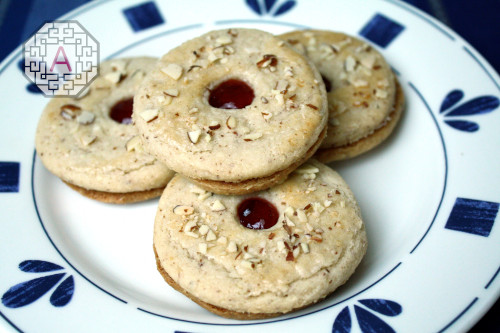
Nowadays, I’m learning how to make American food and desserts. It’s fun to bake. Unfortunately, one weird thing about me is that I don’t like sweet things: ice-cream, candy, cake, pie, or cookies except fruit flavor candy. But I love cooking, baking, and eating. Good grief, if I liked to eat desserts, my belly will be 10 times bigger than now. hehe … Plus, my honey loves desserts, so I can enjoy baking desserts and he can enjoy eating them. 😀 Anyway, I tried a cookie recipe from a baking book that I got recently. It is a 500+ page heavy duty book that got on sale for only 5 dollars. ASSA!!! 😀 The recipe was called “Raspberry Sandwich Cookies.” Since I didn’t have any raspberry jam, I used homemade strawberry jam that my sister-in-law made instead. It worked pretty good. Maybe it was because of her yummy strawberry jam? hehe 😉 My husband gave 4 stars out of 5 for this recipe. Here is the recipe for you, if you want…hehe
Yield: 30 Cookies


DaSiMa (다시마) also called Kombu (konbu in Japanese or haidai in Chinese) are edible kelp from widely eaten in East Asia.

Red bean paste or Azuki bean paste is a sweet, dark red bean paste originating from China. It is used in Chinese cuisine, Japanese confectionery, and Korean cuisine. It is prepared by boiling and mashing azuki beans and then sweetening the paste with sugar or honey. The husk of the beans may be removed by sieving before sweetening, which leads to a smoother and more homogeneous paste.
Red bean paste is used in various Korean snack foods and desserts; including: Baram Dduk, BungEoPpang (붕어빵), HoTteok (호떡), PatBingSu (팥빙수), PatDanJa (팥단자), PatJuk (팥죽), PatTteok (팥떡)

Tofu is made by coagulating soy milk and pressing the resulting curds. Although pre-made soy milk may be used, most tofu producers begin by making their own soy milk, which is produced by soaking, grinding, boiling and straining dried (or, less commonly, fresh) soybeans.

In Korea, squid is often made into JeotGal (in Korean). Heavily salted squid is left to ferment, sometimes with its innards, for up to a month, and is sold in small jars. This salty, strong flavored item is served in small quantities as a side dish (BanChan), or an accompaniment to white rice or alcoholic drinks. In Korea, dried squid is also a popular accompaniment for alcoholic beverages, called AnJu. Dried squid is often served with peanuts. Squid is also served roasted, with hot pepper paste and/or mayonnaise as a dip sauce. Steamed squid, or boiled squid, is also a delicacy.
In Korea, live squid is freshly taken from a tank, killed, cleaned and served quickly. Unlike octopus served in a similar fashion however, squid tentacles do not usually continue to move for long enough to reach the dinner table. This type of fresh squid is called 산 오징어 (‘san ojingo’) (also with small octopuses called nakji). The squid is served with wasabi/soy sauce, chili pepper sauce or sesame sauce with salt and often wrapped in lettuce or pillard leaves.

ShinRaMyun, a spicy (辛) noodle soup produced by food company Nong Shim, originated in South Korea and has been exported abroad to over 80 different countries worldwide. This type of noodle has obtained a cult-like following by lovers of its spicy flavor. Its unique taste was developed in the company’s research labs and from there, it has since became the No. 1 selling noodle in an already saturated market.

This salad is called angel noodle salad in Korea. That is an interesting name, isn’t it? 🙂 I do not know exactly where the name came from, but I guess maybe the clear noodles and white mayo gives it an image of angel? Or, maybe it is because they have such a unique feeling when chewing them, that it could be compared to the unique feeling we would get meeting an angel in a dream? hehe … Well, whatever the reason is, this noodle is made from seaweed jelly (kelp), and it is a low calorie food. If you reduce the amount of mayo or skip it, then it could be a good diet food. Also, it could be good as an appetizer for a party.
Yield: 1 Quart

CheonSaChae is half-transparent noodles made from the jelly-like extract left after steaming kombu, without the addition of grain flour or starch. The taste is bland, so they are generally eaten as a seasoned light salad, or served as a garnish beneath sliced raw fish. CheonSaChae has a chewy texture and is low in calories.