
BuChu Oi MuChim is made with garlic chives and cucumbers. This dish is a little spicy and sour and it is easy and simple to make. Try it someday with either Korean food or western food.
Yield: 3 Cups
[Read more…]
Korean Food and Recipes
BuChu Oi MuChim is made with garlic chives and cucumbers. This dish is a little spicy and sour and it is easy and simple to make. Try it someday with either Korean food or western food.
Yield: 3 Cups

AeHoBak BokkEum (애호박 볶음) is a simple Korean side dish. The natural zucchini flavor shines in this dish with a hint of the garlic, green onions, salt, sesame oil, and sesame seeds. This is a common flavor that you can taste in Korean dishes. It is good when added to bibimbap.
Yield: 1 Pint

In Korean cuisine, there are many different kinds of jeon (전). Jeon is basically slightly salted food (meat, seafood, fish, mushrooms, vegetables, etc.) that is covered with flour and eggs, or dip in batter and fried. Today, I’m going to show you a variety using fish. You can use any white-fleshed fish such as haddock, pollack, and so on. My favorite for this recipe is haddock, because it has less of a fishy taste. Since it is not deep fried, it will be healthier, and you will not lose the flavor with excessive grease. 😉 Koreans usually eat this as a side dish. It is best to eat this right after you cook it.
Yield: 3 Servings

There are many different kinds of kimchi, and Koreans eat kimchi everyday. There are even songs about kimchi such as “I Can’t Live Without Kimchi.” Moms love to have a good kimchi refrigerator. Today I will post the most common kimchi, “napa cabbage kimchi.” Kimchi is a dish of fermented vegetables with various seasonings. It is a traditional dish in Korea.
Yield: 1 Gallon

Yield: ⅔ Quart
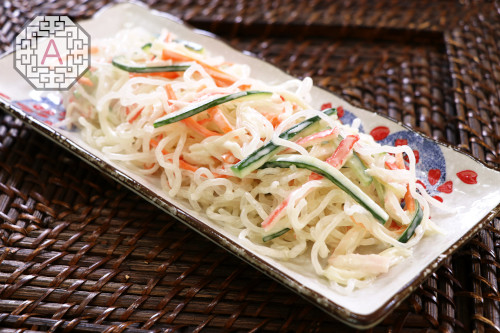
This salad is called angel noodle salad in Korea. That is an interesting name, isn’t it? 🙂 I do not know exactly where the name came from, but I guess maybe the clear noodles and white mayo gives it an image of angel? Or, maybe it is because they have such a unique feeling when chewing them, that it could be compared to the unique feeling we would get meeting an angel in a dream? hehe … Well, whatever the reason is, this noodle is made from seaweed jelly (kelp), and it is a low calorie food. If you reduce the amount of mayo or skip it, then it could be a good diet food. Also, it could be good as an appetizer for a party.
Yield: 1 Quart

This is a healthy Korean side dish made with mung bean sprouts. It is similar with the bean sprout side dish (Kong NaMul, 콩나물); however, mung bean sprouts are more perishable than other vegetables, so it is best to eat this dish right after you make it. You can keep it in the refrigerator for a day or two. Since it will get a lot of water after you make this dish, it is important to add salt and set it aside for sometime, and squeeze the water out later.
Yield: 1 Pint

Yield: 2 Servings

Fish cakes are popular with children. The savory flavor of fish cakes, fried with a delicious sauce and veggies, makes a great side dish. Since this can be used for more than a week, and it tastes good cold, moms like to make plenty of it in advanced. Store it in the refrigerator and serve it with your meals.
Yield: 2 Cups

JangJoRim (장조림) is a Korean side dish using mainly beef and soy sauce. You can also use pork, chicken, or even mushrooms (vegetarians can skip the eggs too) instead of beef. Once you cook this, you can keep it in the refrigerator and serve it with other Korean side dishes for your meal. Usually we use quail’s eggs for this dish, but if you cannot find them in the store, like me, you can just use chicken eggs instead.
Yield: 2 Quarts
